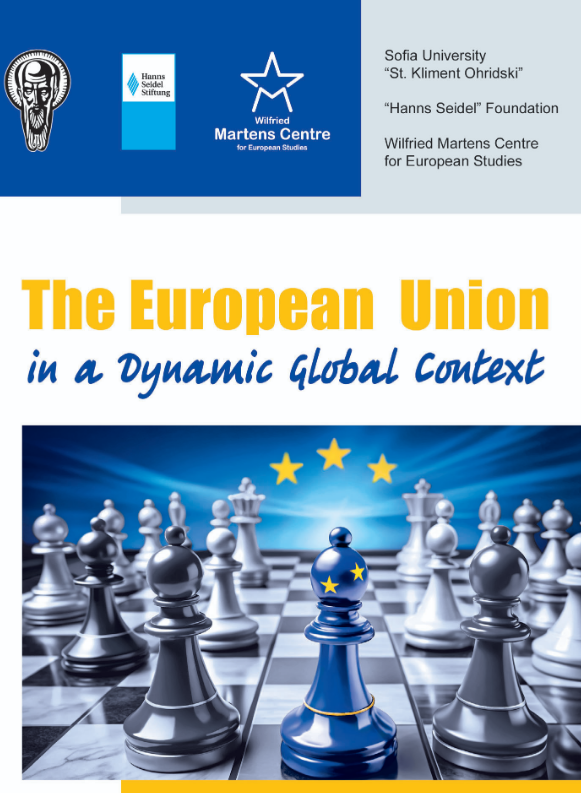
Strengthening EU legitimacy through self-organizing governance
DOI:
https://doi.org/10.60054/PEU.2025.12.86-97Keywords:
EU Legitimacy, Self-Organizing Governance, Multi-Level Governance, Polycentric Coordination, Crisis ManagementAbstract
The European Union (EU) faces interconnected legitimacy challenges stemming from perceptions of a democratic deficit and the strain of recurring crises. While existing research has documented these challenges, less attention has been paid to how network dynamics within EU institutions could address them. This paper proposes a novel analytical framework based on self-organizing network theory to examine how decentralized, adaptive governance patterns can strengthen legitimacy and improve crisis responses within the EU’s multi-level governance system. By comparing how the EU has responded to different crises, the paper investigates the mechanisms through which distributed authority architectures, metagovernance feedback loops, and emergent polycentric coordination may enhance multi-level governance, bridge representation gaps, and reinforce institutional resilience. The paper’s findings suggest that incorporating self-organizing network principles into institutional design could help the EU better balance flexibility and stability in crisis management while strengthening democratic legitimacy. This research contributes to ongoing debates on EU governance by offering practical insights into how institutional design can adapt to polycrisis conditions.
References
Angelou, A. (2025). Linking crises: Inter-crisis learning and the European Commission’s approach to the National Recovery and Resilience Plans. Comparative European Politics, 23(1), 40-56.
Ansell, C., Sørensen, E., & Torfing, J. (2023). Public administration and politics meet turbulence: The search for robust governance responses. Public Administration, 101(1), 3-22.
Ansell, C., Sørensen, E., Torfing, J., & Trondal, J. (2024). Robust governance in turbulent times. Cambridge University Press.
Anzola, D., Barbrook-Johnson, P., & Cano, J. I. (2017). Self-organization and social science. Computational and Mathematical Organization Theory, 23, 221-257.
Arroyo, J., Del Giovane, C., Mizsei, B., Vu, H., & Yeung, T. Y. C. (2024). The EU Vaccines Strategy: A mixed bag of achievements and discontent. European Journal of Risk Regulation, 1-17.
Beaussier, A. L., & Cabane, L. (2020). Strengthening the EU’s response capacity to health emergencies: insights from EU crisis management mechanisms. European journal of risk regulation, 11(4), 808-820.
Behnke, N. (2024). Coping with turbulence and safeguarding against authoritarianism: Polycentric governance as a resilience resource. Politics and Governance, 12 (2024. Article 8596. https://doi.org/10.17645/pag.8596
Biten, M., Kuhn, T., & van der Brug, W. (2023). How does fiscal austerity affect trust in the European Union? Analyzing the role of responsibility attribution. Journal of European Public Policy, 30(6), 1033-1050.
Börzel, T. A., & Panke, D. (2007). Network governance: Effective and legitimate?. In Theories of democratic network governance (pp. 153-166). London: Palgrave Macmillan UK.
Boin, A., & Rhinard, M. (2023). Crisis management performance and the European Union: the case of COVID-19. Journal of European Public Policy, 30(4), 655-675.
Cabane, L., & Lodge, M. (2024). Un-solvable crises? Differential implementation and transboundary crisis management in the EU. West European Politics, 47(3), 491-514.
Christensen, T., Danielsen, O. L. E. A., Lægreid, P., & Rykkja, H. (2016). Comparing coordination structures for crisis management in six countries. Public Administration, 94(2), 316-332.
De Rynck, S. (2016). Banking on a union: the politics of changing eurozone banking supervision. Journal of European Public Policy, 23(1), 119-135.
Duszczyk, M., Podgórska, K., & Pszczółkowska, D. (2020). From mandatory to voluntary. Impact of V4 on the EU relocation scheme. European Politics and Society, 21(4), 470-487.
Fabbrini, F. (2015). Austerity, the European Council, and the institutional future of the European Union: a proposal to strengthen the presidency of the European Council. Indiana Journal of Global Legal Studies, 22(2), 269-334.
Feiock, R. C., & Scholz, J. T. (2010). Self-organizing governance of institutional collective action dilemmas: An overview. Self-organizing federalism: Collaborative mechanisms to mitigate institutional collective action dilemmas, 3-32.
Ferrara, F. M., & Kriesi, H. (2022). Crisis pressures and European integration. Journal of European public policy, 29(9), 1351-1373.
Georgiev, V. (2014). Towards a common European border security policy. In Developing European Internal Security Policy (pp. 113-132). Routledge.
Gjaltema, J., Biesbroek, R., & Termeer, K. (2020). From government to governance... to meta-governance: a systematic literature review. Public management review, 22(12), 1760-1780.
Krogh, A. H., & Triantafillou, P. (2024). Developing New Public Governance as a public management reform model. Public Management Review, 26(10), 3040-3056.
Martinsen, D. S., Mastenbroek, E., & Schrama, R. (2022). The power of ‘weak’ institutions: Assessing the EU’s emerging institutional architecture for improving the implementation and enforcement of joint policies. Journal of European Public Policy, 29(10), 1529-1545.
Mastenbroek, E., & Martinsen, D. S. (2018). Filling the gap in the European administrative space: The role of administrative networks in EU implementation and enforcement. Journal of European Public Policy, 25(3), 422-435.
Mårand, F., Hofmann, S. C., & Irondelle, B. (2011). Governance and state power: A network analysis of European security. JCMS: journal of common market studies, 49(1), 121-147.
Moraczewska, A. (2024). Crisis management at the EU’s external borders in the face of migratory pressures. In Geopolitical and Humanitarian Aspects of the Belarus - EU Border Conflict (pp. 47-60). Routledge.
Ovacık, G., Ineli-Ciger, M., & Ulusoy, O. (2024). Taking Stock of the EU-Turkey Statement in 2024. European Journal of Migration and Law, 26(2), 154-178.
Roos, M., & Schade, D. (2023). Introduction: The EU under strain. In M. Roos, & D. Schade (Eds.), The EU Under Strain?: Current Crises Shaping European Union Politics (Vol. 1). Walter de Gruyter GmbH & Co KG.
Schild, J. (2013). Leadership in hard times: Germany, France, and the management of the Eurozone crisis. German Politics and Society, 31(1), 24-47.
Schout, A., & Jordan, A. (2005). Coordinated European governance: Self-organizing or centrally steered?. Public Administration, 83(1), 201-220.
Schoeller, M. G. (2018). The rise and fall of Merkozy: Franco-German bilateralism as a negotiation strategy in Eurozone crisis management. JCMS: Journal of Common Market Studies, 56(5), 1019-1035.
Schrama, R., Martinsen, D. S., & Mastenbroek, E. (2024). European administrative networks during times of crisis: Exploring the temporal development of the internal market network SOLVIT. Regulation & Governance, 18(4), 1395-1410.
Sørensen, E., & Torfing, J. (2007). Theoretical approaches to metagovernance. In Theories of democratic network governance (pp. 169-182). London: Palgrave Macmillan UK.
Thygesen, N., Beetsma, R., Bordignon, M., Duchêne, S., & Szczurek, M. (2019). Assessment of EU fiscal rules with a focus on the six and two-pack legislation. European Fiscal Board Report.
Vogler, J. P. (2020). The political economy of the European Union: An exploration of EU institutions and governance from the perspective of polycentrism. Exploring the Political Economy and Social Philosophy of Vincent and Elinor Ostrom, edited by Peter J. Boettke, Bobbi Herzberg, and Brian Kogelmann, 145-181.
Yi, H. (2018). Network structure and governance performance: What makes a difference?. Public Administration Review, 78(2), 195-205.
Zaun, N. (2017). EU Asylum Policies: The Power of Strong Regulating States. Springer.
Zhelyazkova, A. (2024). Do EU policies constrain government autonomy? Insights from the implementation of EU migration policies. West European Politics, 47(3), 595-618.